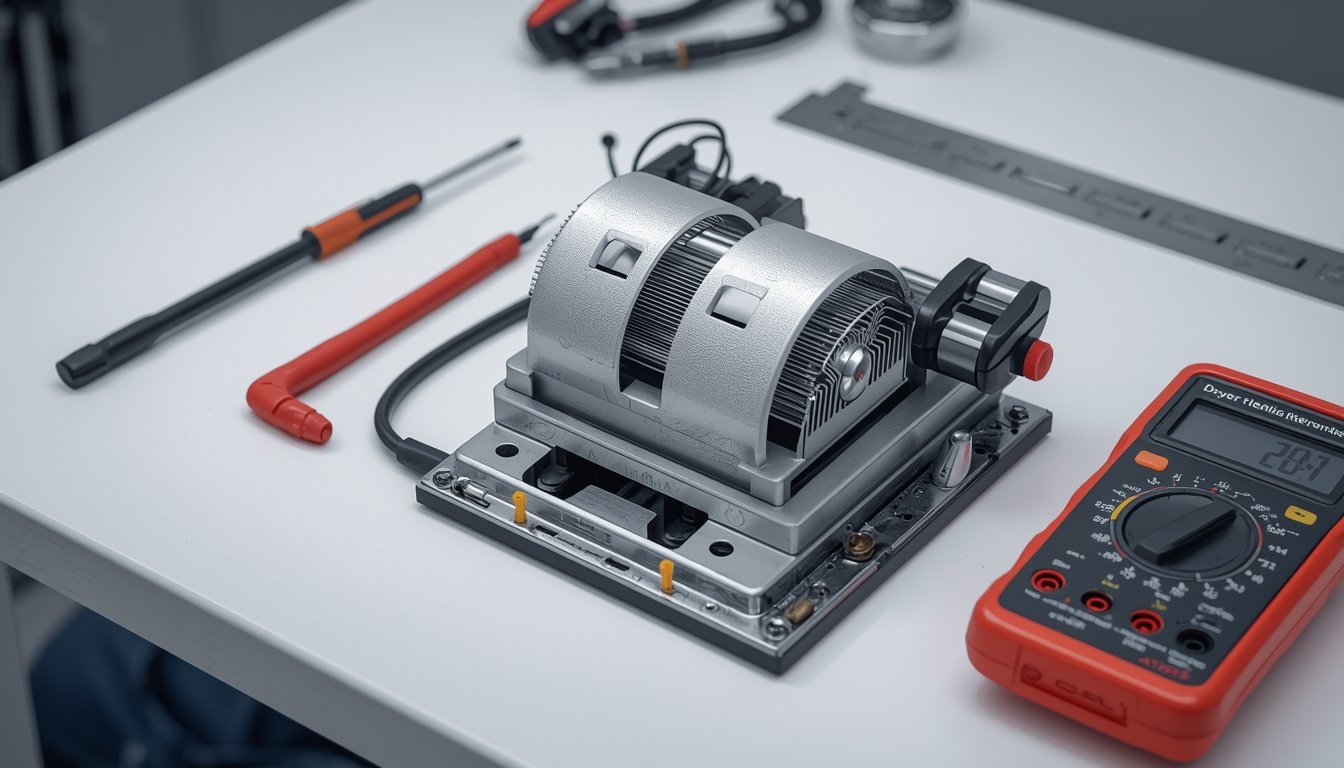
If your dryer smells hot but clothes still do not dry properly, the heating element may be overheating or failing while airflow is limited. The machine can create excess heat in the wrong way without delivering efficient drying performance.
Because the heating element is central to heat production in many electric dryers, even a small failure can create obvious drying problems. That is why these symptoms often appear dramatic even when the cause is limited to one component inside the heater housing.
What This Problem Usually Means
This usually means the dryer heat system is under stress rather than operating normally. The dryer may feel hot, but the heat is not being delivered evenly or effectively through the drum and vent path.
In practical terms, the dryer is reaching a point where it can still run mechanically, but the heat side of the system is no longer doing its job properly. That is why heating element problems often look serious even when the repair itself is relatively straightforward.
For that reason, the heating element should be treated as a core heat component rather than a minor possibility. If it cannot produce or sustain normal heat, drying performance changes immediately.
Why This Happens
A damaged heating element, restricted vent, or overheating inside the housing can create this symptom. When airflow is poor, the dryer may smell hotter than normal while still drying badly because moisture is not being removed efficiently.
Restricted airflow is especially important because it raises operating temperature and places more stress on the element over time. Even a new element can fail early if the vent system is clogged and the dryer keeps overheating.
That gradual wear pattern is why some dryers seem to lose performance slowly rather than failing all at once. Heat complaints often build up over time before the element finally stops working completely.
How to Confirm the Issue
Check the exhaust airflow first, then inspect the element for visible damage and test its continuity. If the vent path is clear but the dryer still smells unusually hot, the element and surrounding housing deserve closer inspection.
It helps to inspect the surrounding housing and vent path at the same time. A correct diagnosis usually comes from combining a continuity test with a visual check and a quick look at airflow conditions.
A few extra minutes spent confirming the element properly can save a lot of guesswork. It is one of the most useful checkpoints in any electric dryer heat diagnosis.
What to Do Next
This is a symptom where airflow and element condition should be checked together. Use this dryer heating element guide to work through both factors instead of assuming the smell alone tells the full story.
That structured approach reduces wasted time and helps you avoid replacing unrelated parts. Once the element is ruled in or out, the rest of the heat diagnosis becomes much simpler.
Working in that order makes the repair process more predictable and keeps you focused on the parts most likely to cause the symptom. Once the heating element is confirmed, the next repair step is usually clear.